

Jul 2, 2026AI in Oncology
You Are the Most Important Member of Your Medical Team
The email came in on a Saturday night.
Lisa Booth5 min read
Read article
A CureWise founding member on living with HR+, HER2- metastatic breast cancer, why CDK4/6 inhibitor sequencing matters, and how precision oncology and your own cancer data can guide treatment.
I should be making a grocery list. Instead I'm reading cancer research on a gorgeous Seattle Saturday morning while my coffee gets cold.
My extended family is about to descend for a night of celebrating: my son's high school graduation, my parents' 60th anniversary, my brother's retirement, my brother-in-law's 60th. ASCO is also this weekend. I always pay attention to ASCO because I have to. It's the largest cancer conference in the world, and new drugs announced there have literally kept me alive. But this morning's highlights weren't about a new drug. They were about something I think matters just as much: not what drugs we have, but how we sequence them. Because a drug that works is only half the answer. Knowing which patient should get it, when, and in what order is the other half, and that half has been largely unsolved for as long as I've been a patient.
That question takes me back to July 2016.
My cancer had just recurred for the first time, and I did what any determined, terrified patient does: I got second, third, and fourth opinions. Four smart, qualified oncologists. Four completely different treatment recommendations, each one shaped by that doctor's own training, experience, and the patients they'd seen before me. Nobody was wrong, exactly. Nobody agreed, either. I had to go home and pick one.
What that experience taught me, and what I've never quite been able to shake, is that oncology still has a significant art component sitting alongside the science. A brilliant field doing its best with tools that don't always give a clear answer. And when the decision is about your life, "it depends on who you ask" is a deeply unsatisfying place to land.
The science has changed a lot since then.
Today's HR-positive metastatic breast cancer patients face a version of that same choice within a single drug class. There are now three CDK4/6 inhibitors approved: palbociclib, ribociclib, and abemaciclib. All three work by hitting the brakes on cancer cell division. All three are considered standard treatment. They have been genuinely life-changing for a lot of patients.
But having three drugs that work is not the same as knowing which one is right for which patient, in which order. And right now, there is no clear guidance on that question.
ASCO 2026 moved the ball forward. But it didn't cross the finish line.
Three sets of results this week tell a complicated and important story. The VIKTORIA-1 trial, presented as a late-breaking result at ASCO, showed that palbociclib, when paired with a drug called gedatolisib that blocks a separate cancer growth pathway, still helped patients whose cancer had already stopped responding to a prior CDK4/6 inhibitor. Most oncologists had assumed that once a cancer outsmarts a CDK4/6 inhibitor, that drug class is done. VIKTORIA-1 suggests that may not always be true, that pairing palbociclib with something that attacks a different vulnerability in the cancer can make it relevant again. The EMBER-3 trial showed that abemaciclib, when paired with a new type of hormone-blocking pill called imlunestrant, kept working for patients after they had already progressed on a CDK4/6 inhibitor, regardless of their genetic subtype. And a real-world study presented at ASCO found that patients retreated with abemaciclib after already having taken abemaciclib had similar outcomes to patients who switched to abemaciclib from a different CDK4/6 drug. In other words, using the same drug class twice in a row may be a viable option, something clinicians had been uncertain about.
Put all three together and what you get is not a clean answer. What you get is a picture of a field learning that sequence matters enormously, that the combination you pair these drugs with matters, and that the molecular changes happening inside a patient's cancer over time are the key variable that most of these decisions should hinge on. Right now, that requires blood-based genetic testing to detect mutations like ESR1 and PIK3CA, changes that can happen as a cancer evolves and that point toward which treatment is most likely to work next. Without that information, sequencing these drugs is still largely a judgment call.
That's not a physician's failure. That's the field not yet having the tools to reliably match patient to sequence.
The four oncologists who gave me four different answers in 2016 weren't failing me. They were all smart, well-trained physicians doing their best with the information available to them. The problem wasn't the doctors. The problem was that the science hadn't yet given them a reliable way to match a specific patient's tumor to the right drug in the right order. That gap still exists today, and patients are the ones who live inside it.
CureWise is building exactly the kind of platform this problem demands. Our AI-powered cancer navigator connects patients with the most current research and data relevant to their specific situation today. And we are building toward something bigger: a research capability that connects researchers directly with patients and their data, with the express goal of mining patterns across thousands of real-world treatment experiences. Those patterns are what lead to more focused trials, faster answers, and ultimately better sequencing decisions for the patients sitting across from their oncologist right now.
I joined the founding team because I am tired of making life and death decisions with imperfect information. Every patient deserves better than that. CureWise is how we get there.
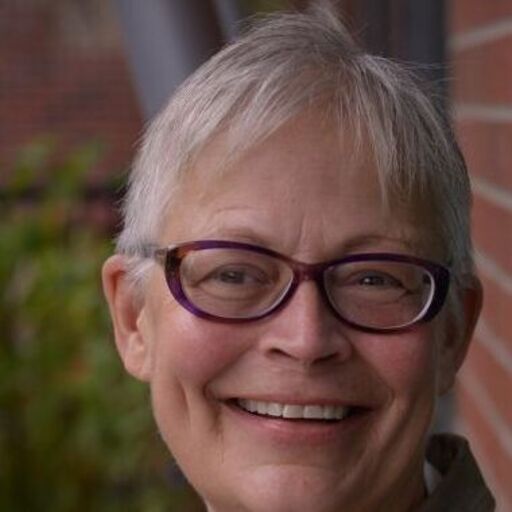
Lisa Booth is an eleven-year metastatic breast cancer thriver, a member of the CureWise founding team, and a lifelong advocate for patients who deserve better information than she had. She is currently enrolled in a clinical trial of disitamab vedotin plus tucatinib, continuing to push forward for herself and for the patients who come after her.
CDK4/6 inhibitors are targeted therapies used for hormone receptor-positive, HER2-negative breast cancer, the most common subtype. They block proteins that drive cancer cell division. Think of them as a brake on the machinery that makes cancer cells multiply. Three are currently approved in the US: palbociclib (Ibrance), ribociclib (Kisqali), and abemaciclib (Verzenio).
They hit the same brakes but with different force, different precision, and different side effects. Ribociclib is the only one shown to help patients live longer in the first-line metastatic setting. Abemaciclib is the only one approved to reduce recurrence risk in early-stage disease. ASCO 2026 data adds another layer: the drug you pair a CDK4/6 inhibitor with in later lines of treatment, and what is happening in your cancer's biology at that point, may matter as much as which CDK4/6 drug you choose.
Three readouts advanced the conversation. VIKTORIA-1 showed that palbociclib, paired with a drug called gedatolisib that blocks a separate cancer growth pathway, still added meaningful benefit even after a patient's cancer had already progressed on a prior CDK4/6 inhibitor. EMBER-3 showed that abemaciclib combined with a new hormone-blocking pill called imlunestrant kept working after CDK4/6 inhibitor progression, regardless of genetic subtype. A real-world study found that retreating patients with abemaciclib after prior abemaciclib is a viable option. Together they suggest the CDK4/6 class is not necessarily done after first use, but that what you combine it with and what your cancer's biology looks like at that point are critical variables.
As breast cancers evolve and develop resistance to treatment, they often acquire new genetic changes. ESR1 mutations make cancer cells less responsive to hormone-blocking therapies. PIK3CA mutations activate a separate growth pathway that can drive cancer forward even when CDK4/6 inhibitors are present. Both can be detected through a simple blood test called a liquid biopsy, and both affect which treatment is most likely to work next. They frequently co-occur, which is part of what makes sequencing decisions so complex.
A liquid biopsy is a blood test that detects fragments of tumor DNA circulating in the bloodstream. It can identify genetic changes that may have developed since your original diagnosis and that affect which treatments are most likely to work next. If you have HR-positive metastatic breast cancer and your cancer has progressed on a CDK4/6 inhibitor, asking your oncologist about liquid biopsy testing is an increasingly important conversation to have.
CureWise is an AI-powered cancer navigator that connects patients with the most current research relevant to their specific situation. Looking ahead, CureWise is building a research capability that connects researchers directly with patients and their data, enabling the kind of pattern recognition across thousands of real-world treatment experiences that leads to more focused trials and faster answers. The goal is to help every patient become the most informed member of their own medical team.
This article is for education and is not medical advice. Always discuss your care with your medical team.
Newsletter
Get new articles on cancer care, AI, and precision medicine, written for patients and carepartners navigating a diagnosis.
The email came in on a Saturday night.

Cancer as the Oldest Betrayal in Biology

Clonal Evolution, Escape Routes, and the Control Problem in Precision Medicine
Get clear insight into your options and the confidence to advocate for the care you deserve.